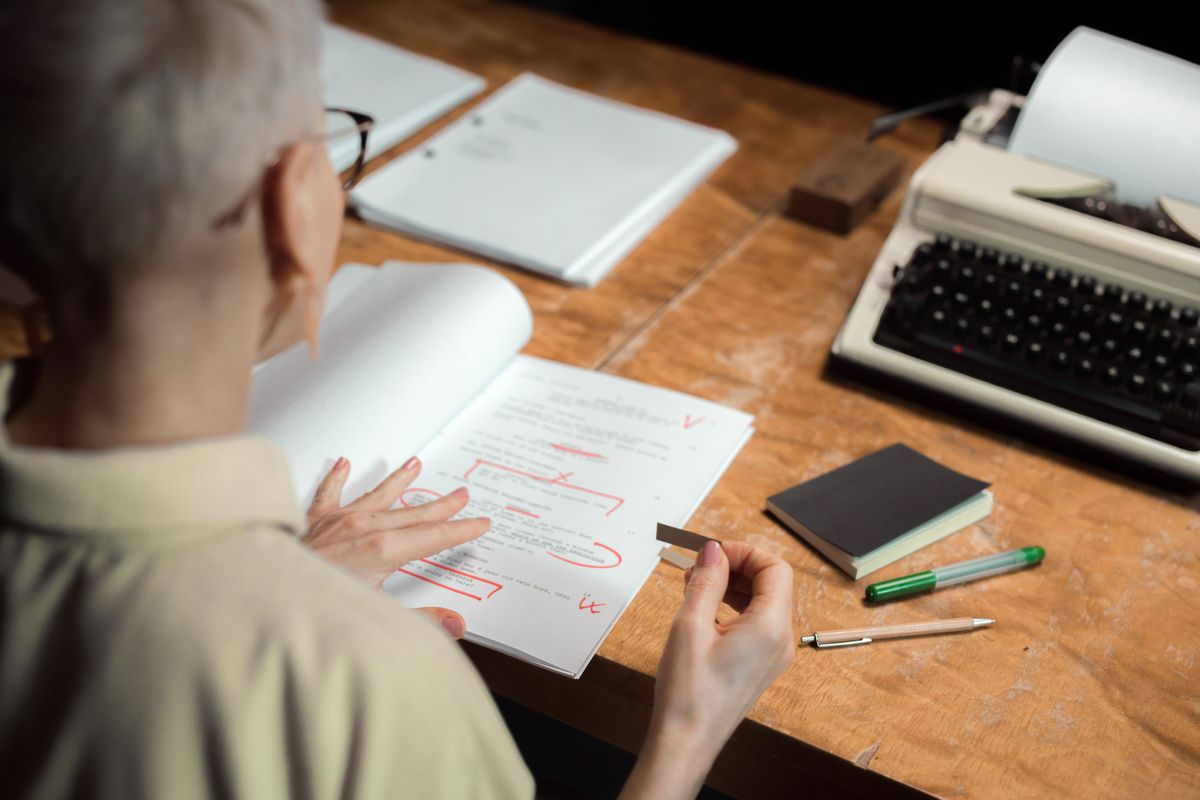
My first drafts are always too long — by about a third. Yours probably are too, and that’s not a flaw, it’s the process: first we discover what we think, then we decide what the reader needs. The mistake is editing with a red pen and a grudge. Here’s the kinder method I use on every piece, mine or my clients’.
Cut the scaffolding, keep the building
First drafts are full of thinking-out-loud: throat-clearing openings, repeated setups, conclusions that summarise what we just read. Readers don’t need to watch you arrive — they just need you there. Delete the first paragraph of anything you write this week. Nine times out of ten, the piece starts stronger without it.
Ask “who is this sentence for?”
Every line should serve the reader or the story — never the writer’s ego. That glittering metaphor you love? If it stops the story to admire itself, thank it and cut it. Save darlings in a separate file; they make excellent seeds for future pieces, and knowing they’re safe makes deleting them painless.
“Revision isn’t punishment for a bad draft. It’s the second half of writing the good one.”
Read backwards, then forwards
Read the piece backwards, paragraph by paragraph, to catch repetitions and logic gaps your story-brain skips. Then read it forwards, aloud, for rhythm. Two passes, two different editors living in your head — the detective and the musician. Both love the reader; they just show it differently.
Editing kindly doesn’t mean editing softly. It means every cut is a gift: less fog, more feeling, and a reader who reaches the end without once checking how much is left.
Clara Bennett
Essayist & brand storyteller behind Pennant & Prose. 120+ stories published, 55K+ monthly readers.